Everyday Jewelry Styling for Elegant Fashion Details
The smallest detail can change the whole mood of an outfit. A plain white shirt, dark denim, and clean loafers can feel unfinished until the right chain, ring, or earring gives it intent. That is the quiet power of everyday jewelry styling: it turns clothes you already own into looks that feel polished without looking overworked. For American women moving between office days, school drop-offs, dinner plans, errands, and weekend travel, jewelry has become less about saving “good pieces” for special events and more about building a daily signature. Style does not need to shout to look expensive. In fact, the most elegant choices often whisper. A thin gold hoop, a watch that fits your wrist, a soft stack of rings, or a pendant that sits exactly where your neckline needs it can say more than a crowded outfit ever could. Even brands and media platforms that discuss modern fashion visibility, such as digital lifestyle publishing, show how much attention small details can carry when they feel personal, clean, and current.
Jewelry Styling That Starts With Your Real Day
Good jewelry begins with the life you actually live, not the fantasy version of it. A necklace that works for a quiet brunch may annoy you during a long commute, and heavy earrings that look strong in photos may feel wrong during an eight-hour workday. The smartest jewelry styling choices respect your schedule first, then your outfit. That sounds less glamorous than trend-chasing, but it is the reason some people always look finished while others look decorated.
Minimalist jewelry for busy weekday outfits
Minimalist jewelry works because it gives shape to an outfit without asking for attention at every angle. A slim bangle, small hoops, and a fine chain can make a cotton tee and blazer feel intentional, especially in American offices where dress codes have softened but expectations still exist. The goal is not to disappear. The goal is to look like you meant every detail.
A smart weekday base might include one metal tone, one clean neckline piece, and one hand detail. For example, a woman in Chicago wearing a black knit top, straight-leg jeans, and ankle boots can add a short gold chain, a narrow watch, and one ring. Nothing screams. Everything connects. That is where elegance lives on normal days.
Minimalist jewelry also helps when your clothing already carries texture. A ribbed sweater, linen button-down, tweed jacket, or pleated skirt brings enough visual movement. Adding oversized jewelry on top can make the look feel noisy. Small pieces let the fabric breathe, which often makes the full outfit look more expensive.
Capsule accessories that make mornings easier
Capsule accessories save time because they remove the daily guessing game. Instead of owning thirty pieces that fight for attention, you build a tight set that covers the way you dress most often. Think small hoops, medium hoops, a pendant, a chain bracelet, a watch, a ring stack, and one pair of dressier earrings.
The trick is choosing pieces that share a mood. If your wardrobe leans soft and neutral, capsule accessories in brushed gold, pearl, or warm silver will blend with ease. If your closet is sharper, with black tailoring and crisp denim, polished silver or sculptural gold may feel cleaner. The pieces should not match like a set from a display case. They should feel like relatives.
A capsule also protects you from buying jewelry that only works once. That crystal choker might look fun for a holiday party, but a sleek pendant may carry you through dinner, travel, work, and weekends. The best daily pieces earn their place over and over.
Matching Jewelry to Necklines, Fabrics, and Proportion
Once your jewelry fits your day, it needs to fit your clothes. This is where many outfits lose balance. A beautiful necklace can sit wrong with the wrong neckline, and a strong earring can compete with a collar, scarf, or high-neck sweater. Proportion decides whether jewelry looks refined or random.
Layered necklaces that work with common necklines
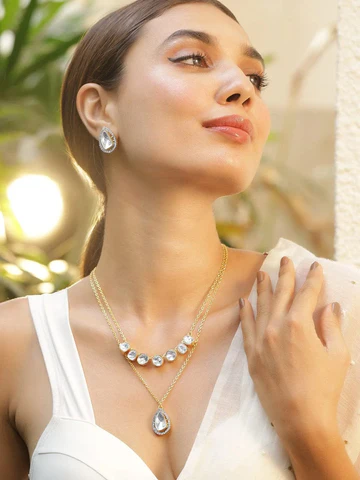
Layered necklaces look best when each chain has room to exist. A crewneck usually works with a short chain that rests above the fabric or a longer pendant that drops below the neckline. A V-neck welcomes a necklace that follows the same angle, because the eye already moves downward. A button-down gives you more freedom, especially when the top two buttons are open and the chains sit inside the frame.
Layered necklaces can go wrong when every chain lands in the same place. The result looks tangled before it actually tangles. Choose different lengths with small spacing between them, such as a close chain, a mid-length charm, and a longer fine pendant. The difference should look planned, not accidental.
Fabric weight matters too. A chunky knit can handle a stronger chain, while silk or satin often looks better with delicate pieces. A thin blouse and a heavy necklace can feel like a mismatch because the jewelry visually outweighs the clothing. Balance is not a rulebook. It is a feeling your eye can learn.
Statement earrings without overpowering the face
Statement earrings should frame your face, not steal it. The strongest pairs usually work because they connect to your features, hair, or neckline. A sleek bun can handle a longer drop earring. Loose waves may look better with a bold stud or rounded hoop. A high neckline often benefits from earrings because the neck area is already covered.
Many people make the mistake of pairing statement earrings with a necklace that fights them. One focal point usually looks richer. If your earrings are sculptural, skip the necklace or wear the thinnest chain you own. This creates space around the face, which makes the earrings look chosen rather than piled on.
For a real-world example, picture a woman in Los Angeles wearing a simple black slip dress with flat sandals for dinner. Large gold hoops may be enough. Add a heavy necklace, stacked bangles, and cocktail rings, and the look starts to feel less confident. Editing is not boring. Editing is taste.
Using Jewelry to Shape Personal Style
Clothes show the outline of your style, but jewelry often reveals the point of view. Two people can wear the same white shirt and jeans, yet one looks classic, one looks artsy, and one looks polished because their details tell different stories. That is why jewelry deserves more thought than “what matches.”
Building a signature with rings, hoops, and watches
A signature does not have to be dramatic. It can be the same thin hoops you wear most days, a watch that grounds your outfits, or a ring stack that feels like part of your hand. Repetition creates recognition. People start to associate those details with you, which is one reason stylish people often repeat accessories more than clothing.
Everyday jewelry styling becomes easier when you know your anchor pieces. Maybe your anchor is silver hoops because they brighten your face. Maybe it is a gold watch because your wardrobe leans warm. Maybe it is a pearl stud because it softens structured clothes. Once you know the anchor, the rest of the outfit has a center.
Watches deserve more attention here. In a phone-heavy culture, a watch is no longer only practical. It signals finish. A leather strap feels warm and classic, while a metal bracelet watch can sharpen casual clothes. A watch can make leggings and a coat look like an outfit instead of a rush.
Mixing metals with intention, not apology
Mixing metals works when it looks deliberate. The old idea that gold and silver cannot sit together feels outdated, especially in modern American style where wardrobes often blend casual, vintage, and designer-inspired pieces. The key is repetition. One silver ring with all-gold jewelry can look accidental. Silver earrings, a silver watch, and a gold necklace with a mixed pendant look planned.
Bridge pieces help. A two-tone watch, mixed-metal chain, or ring that contains both colors gives the eye permission to accept the combination. Once one piece connects the metals, the rest feels easier. You do not need a perfect match. You need a reason.
Skin tone can guide you, but it should not trap you. Some people glow in warm gold. Others look sharper in silver. Many can wear both depending on makeup, fabric color, and lighting. Try jewelry near your face in daylight before deciding. Bathroom lighting has ruined more style judgments than bad taste ever has.
Care, Storage, and Smart Buying Habits
Jewelry loses its charm fast when it looks dull, tangled, or poorly stored. The less romantic side of style is maintenance, but it matters. A clean inexpensive hoop often looks better than a neglected fine piece. Care keeps your details elegant long after the purchase excitement fades.
Keeping daily pieces polished and wearable
Daily jewelry needs a simple care rhythm. Remove pieces before swimming, heavy workouts, lotion, perfume, and cleaning products. These habits sound small, but they protect plating, stones, clasps, and shine. A soft cloth near your dresser can do more for your style than another impulse purchase.
Storage matters because tangled jewelry becomes ignored jewelry. Use a small tray for daily pieces and separate compartments for chains. Earrings should stay paired, rings should stay visible, and delicate necklaces should hang or lie flat. If you cannot see your jewelry, you will not wear it well.
Travel needs a plan too. A small jewelry case with sections prevents the sad hotel-room ritual of untangling chains before dinner. For weekend trips across the U.S., pack one metal tone, one day earring, one evening earring, and one necklace that works with every top. More options often create more confusion.
Buying fewer pieces with better judgment
Good buying starts with asking how often a piece will work with your real wardrobe. A necklace that only suits one dress may not be a mistake, but it should not pretend to be a daily essential. Spend more attention on cost per wear than sticker price. A $90 pair of hoops worn twice a week for two years beats a $25 trend piece that sits untouched.
Check clasps, weight, finish, and comfort before falling for design. Earrings that pull your lobes will stay in the drawer. Rings that snag sweaters will annoy you. A bracelet that clanks against your laptop during work may become weekend-only. Beauty has to behave.
The best jewelry box is not the fullest one. It is the one where every piece has a job, a mood, and a reason to be reached for on a normal Tuesday.
Conclusion
Elegant jewelry is not about owning more. It is about noticing what your outfits are missing and choosing details that answer with restraint, shape, and personality. The right pieces help you look dressed without looking overdone, which is the sweet spot for modern American style. Everyday jewelry styling works best when it supports your life, flatters your clothes, and gives your wardrobe a signature you can repeat with confidence. Start with the pieces you wear most, remove what feels fussy, and build around the details that make you feel clear, polished, and yourself. Open your jewelry drawer today, choose five pieces that truly earn their space, and let those become the foundation for a cleaner, smarter style story.
Frequently Asked Questions
What is the best everyday jewelry for simple outfits?
Small hoops, a fine chain, a watch, and one or two rings work well with simple outfits. These pieces add polish without making the look feel crowded. Choose one metal tone at first if you want the easiest daily formula.
How do I style minimalist jewelry without looking plain?
Focus on placement, shine, and proportion. Minimalist jewelry looks stronger when the necklace length suits your neckline, earrings frame your face, and rings add detail to your hands. Simple does not mean empty when each piece has purpose.
Can layered necklaces be worn every day?
Yes, layered necklaces can work daily when the chains are light, spaced well, and comfortable. Choose two or three lengths instead of stacking many pieces. Keep the pendants small for workdays, errands, and casual outfits.
How do I choose statement earrings for casual clothes?
Pick statement earrings that contrast with casual basics without overwhelming them. Hoops, sculptural studs, or clean drop earrings can lift jeans, tees, and sweaters. Skip a bold necklace when the earrings already create the main focus.
What jewelry looks best with office outfits?
Office outfits usually look best with polished, quiet pieces such as small hoops, studs, slim bracelets, watches, and fine necklaces. The jewelry should add finish without making noise, catching on clothes, or distracting during meetings.
Is it okay to mix gold and silver jewelry?
Yes, mixed metals look stylish when repeated with intention. Wear at least two pieces in each tone, or add a two-tone watch or ring to connect the look. The mix should feel planned rather than accidental.
How should I store everyday jewelry at home?
Keep daily jewelry visible, separated, and easy to reach. Use trays for rings, small compartments for earrings, and hooks or flat sections for necklaces. Good storage prevents tangles and helps you wear more of what you own.
How many jewelry pieces should I wear at once?
Most everyday outfits look best with two to four visible jewelry points. For example, earrings, a necklace, a watch, and one ring stack can feel balanced. Remove one piece if the outfit starts to look busy.

Related Posts

Despite Constant Change Certain Principles Never Lose Their Value
Small Daily Decisions That Create Lasting Positive Change