Cleaning and Disinfection in Calgary’s High-Traffic Commercial Facilities
The words cleaning and disinfection are often used as though they describe the same task. They do not.
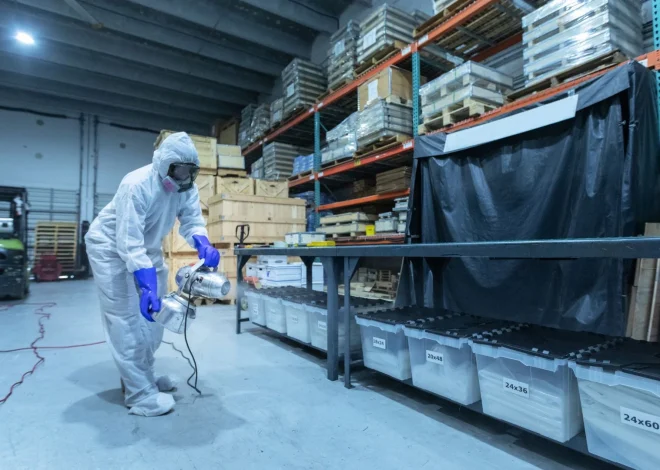
Cleaning physically removes dirt, food residue, grease, dust, and some microorganisms from a surface. Disinfection uses an appropriate product to inactivate specified microorganisms after the surface has been properly cleaned.
That distinction matters in any commercial building, but it becomes particularly important in facilities serving older adults, restaurant customers, patients, children, or large numbers of visitors.
A surface can look clean while still requiring disinfection. It is also possible to apply disinfectant incorrectly and accomplish far less than expected. The product may be used on a dirty surface, wiped away too quickly, mixed at the wrong concentration, or applied to a material for which it was not intended.
Effective facility care requires more than spraying every available surface. It begins with understanding the building, identifying higher-risk areas, selecting appropriate products, and clearly assigning responsibility for the work.
Businesses that need consistent professional janitorial services in Calgary should look for a provider capable of developing a cleaning plan around the facility’s actual use rather than relying on one standard checklist.
Cleaning Must Usually Come Before Disinfection
Disinfectants are not substitutes for cleaning.
A table covered with food residue, a visibly soiled washroom fixture, or a floor coated with winter salt cannot be properly maintained by simply applying disinfectant. The soil must first be removed using a suitable cleaning method.
This first step reduces the material that can interfere with the disinfecting process. Once the surface is clean, an appropriate disinfectant can be applied when the facility’s procedures call for it.
The process generally involves:
- Removing loose debris or visible contamination
- Cleaning the surface using the appropriate product and method
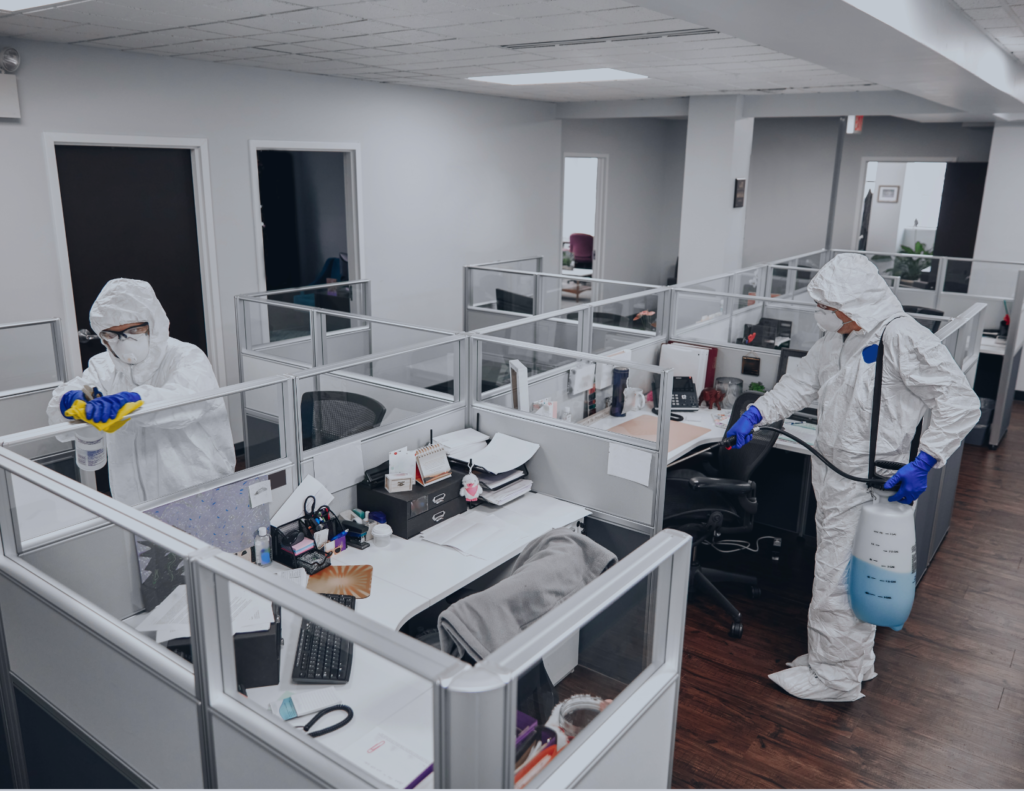
- Applying an approved disinfectant when required
- Keeping the surface wet for the product’s specified contact time
- Following label directions for rinsing, drying, ventilation, and safety
Skipping one of these stages can undermine the result.
Contact time is a frequent source of error. A disinfectant may need to remain visibly wet for a specified number of minutes. If someone sprays the product and immediately wipes it dry, it may not perform as described on its label.
Using more product is not necessarily better. Correct dilution, application, and contact time are more important than a strong smell or an obviously wet surface.
Disinfection Should Be Based on the Facility
Not every commercial property requires the same level of disinfection.
A small private office with limited visitors has different needs than a retirement residence, medical waiting room, restaurant, childcare centre, or busy public facility. Even within one building, different rooms may require different procedures.
A risk-based plan considers:
- Who uses the space
- How many people move through it
- How frequently surfaces are touched
- Whether food is prepared or served
- Whether occupants may be more vulnerable to illness
- Whether the facility has specific regulatory requirements
- Whether an outbreak or known contamination concern exists
This prevents two common mistakes.
The first is under-cleaning important areas because they are included on a general checklist that does not reflect their use. The second is unnecessarily disinfecting every surface, regardless of whether disinfection is required or appropriate.
Routine cleaning remains the foundation. Disinfection is added strategically according to the setting, the surface, facility policies, product directions, and applicable public-health guidance.
Retirement Homes Require Clearly Defined Responsibilities
Retirement homes and continuing-care environments require particular care because many residents may be more vulnerable to complications from respiratory and gastrointestinal illnesses.
These facilities contain a mixture of private living spaces, shared dining rooms, lounges, washrooms, activity rooms, administrative offices, and staff areas. Residents, employees, family members, service providers, and other visitors may all use the same common spaces.
Frequently touched environmental surfaces can include:
- Door handles and push plates
- Handrails
- Elevator buttons
- Reception counters
- Dining-room furniture
- Shared activity equipment
- Washroom fixtures
- Light switches
- Mobility equipment
- Staff work areas
The cleaning plan should define which surfaces are cleaned, which are disinfected, how often the work occurs, which products are used, and who is responsible.
Alberta Health Services’ principles for environmental cleaning and disinfection emphasize written procedures, appropriate product selection, staff education, defined cleaning frequencies, and separation of clean and soiled equipment. These principles apply to acute care, community-based services, and continuing-care settings.
A commercial janitorial provider can support the facility’s environmental cleaning program, but it should work within the home’s established infection-prevention policies. Clinical areas, resident-care equipment, bodily-fluid cleanup, outbreak measures, and other specialized responsibilities may require facility personnel or workers with specific training.
Those boundaries should be established before service begins, not during an urgent situation.
Restaurants Need More Than End-of-Night Tidying
Restaurants face different risks, but the same distinction between cleaning and disinfection remains important.
Food preparation creates grease, moisture, crumbs, spills, and organic residue. Dining areas receive constant contact from customers and staff. Washrooms, door handles, payment areas, and waiting spaces may be used by hundreds of people during a busy day.
Kitchen employees are typically responsible for food-contact surfaces and equipment as part of the establishment’s food-safety program. A commercial cleaning company may handle dining rooms, floors, employee areas, public washrooms, accessible equipment exteriors, waste areas, and other agreed-upon spaces.
The division of work must be clear.
If restaurant staff assume the cleaners will sanitize a preparation surface while the cleaners believe it remains the kitchen team’s responsibility, an important task can be missed. A written scope reduces that risk.
Food-contact surfaces also require products and procedures appropriate to their use. A disinfectant intended for a general hard surface is not automatically suitable for every area where food is prepared. Label directions may require rinsing with potable water after application.
The product, surface, and task must match.
Specialized systems such as kitchen exhaust ducts, hoods, fire-suppression components, and certain pieces of cooking equipment may also require qualified specialty contractors. General janitorial cleaning should never be represented as a substitute for technical services outside its scope.
Medical and Dental Offices Have Their Own Protocols
Medical and dental facilities include both ordinary commercial spaces and areas where healthcare-specific procedures apply.
Reception desks, waiting-room furniture, entrance glass, general floors, public washrooms, and administrative offices may fall within a regular janitorial scope. Examination rooms, clinical equipment, instruments, and surfaces affected by patient care are governed by the facility’s infection-prevention procedures.
The cleaning company and healthcare provider must understand where one responsibility ends and the other begins.
Colour-coded cloths, dedicated equipment, documented procedures, and controlled product use can help prevent tools used in one area from being carried into another. Cleaning from lower-risk areas toward more contaminated areas may also form part of the site’s protocol.
Staff should never assume that a cleaner recognizes every clinical risk automatically. The facility must communicate its requirements, and the provider must confirm that its workers are trained and equipped for the duties assigned to them.
A clearly documented scope is especially important when service occurs after medical staff have left the building.
High-Touch Surfaces Deserve Attention, but Not Guesswork
High-touch surfaces are objects people handle frequently. Common examples include doorknobs, elevator buttons, railings, taps, shared phones, light switches, counters, and appliance handles.
The precise list will vary by building.
A door handle in constant use may require more attention than the top of a filing cabinet. A payment terminal in a busy restaurant is not comparable to a table in a locked meeting room. A handrail in a retirement residence may be touched throughout the day, while another surface remains largely unused.
The best way to identify high-touch points is to observe how people move through the facility.
Walk the building during an active period. Watch which doors are used, where visitors stop, which counters receive frequent contact, and how employees move between work areas. This often reveals priorities that are not obvious from a floor plan.
Once identified, those surfaces can be placed on an appropriate cleaning or disinfection schedule. The frequency should reflect the facility, the number of users, and any relevant health guidance—not an arbitrary promise to disinfect everything constantly.
Product Selection Matters
Commercial disinfectants are formulated for specific uses and organisms. They also have different contact times, safety requirements, and surface limitations.
Before using a product, staff should read its label and confirm:
- The product is authorized for its intended use in Canada
- It is suitable for the surface
- The required dilution is understood
- The stated contact time can be achieved
- Ventilation requirements can be followed
- Required personal protective equipment is available
- Food-contact rinsing instructions are understood
- The product is compatible with other chemicals in use
Products should never be mixed unless the manufacturer specifically directs it. Mixing common cleaning chemicals can produce dangerous reactions or gases.
More aggressive chemistry can also damage property. Repeated use of an unsuitable disinfectant may discolour furniture, affect floor finishes, damage electronics, or cause premature wear on plastics and metals.
A well-managed program considers effectiveness, occupant safety, surface compatibility, and proper use.
The strongest-smelling product is not automatically the most effective one. In fact, heavy fragrance can create discomfort for residents, customers, or employees who are sensitive to odours.
Tools Can Spread Contamination When Poorly Managed
The cleaning product receives much of the attention, but cleaning tools are equally important.
A cloth used in a washroom should not later be used on a lunchroom table. Mop water should not be carried from one area to another indefinitely. Reusable cloths and mop heads require an appropriate laundering or disposal process.
Colour coding is one practical approach. Different cloth or mop colours can be assigned to washrooms, kitchens, general areas, or higher-risk spaces. This gives staff an immediate visual reminder and reduces reliance on memory.
Cleaning equipment should also be stored correctly. Clean supplies need protection from soiled tools, waste, and chemicals that could leak or spill. Bottles should be labelled, and products should remain in approved containers.
Retirement homes, healthcare environments, and food facilities may have additional requirements for equipment separation and storage. The janitorial provider must follow those site-specific procedures.
Good technique is not only about what touches the surface. It includes what happens to the cloth, mop, bucket, and equipment afterward.
Calgary Winters Add Another Layer of Work
Disinfection is only effective when routine soil is under control, and Calgary winters create plenty of it.
Snow, melting ice, gravel, and de-icing materials travel through entrances and into common areas. In a retirement home, restaurant, or clinic, that moisture may appear at the same entrance used by residents, delivery personnel, patients, and visitors.
Entrance maintenance must therefore remain part of the larger cleaning plan.
Mats need to be checked, vacuumed, and cleaned before they become saturated. Wet floors require a prompt response. Salt residue must be removed using a method suitable for the flooring. Secondary staff and delivery entrances should not be overlooked simply because customers do not normally see them.
During a Chinook, conditions can change quickly. A dry entrance in the morning may become wet and heavily soiled by afternoon as outdoor snow melts.
Facilities with steady traffic may benefit from daytime porter service during these periods. Waiting until the overnight shift may leave wet floors, tracked-in debris, or full waste bins unattended for too long.
Outbreak Cleaning Is Different From Routine Service
Retirement homes, care facilities, schools, restaurants, and other establishments should have procedures for responding to suspected or confirmed outbreaks.
Routine cleaning and disinfection continue to be important, but the required frequency, products, protective equipment, documentation, and areas of focus may change.
A commercial cleaner should not invent outbreak procedures independently. The facility must follow direction from its infection-prevention leadership and the appropriate public-health authority.
Before an outbreak occurs, managers and cleaning providers should determine:
- Who can authorize changes to the cleaning program
- Which products will be used
- Whether additional protective equipment is needed
- Which areas require increased frequency
- Who cleans bodily-fluid contamination
- How contaminated materials are handled
- How completed work is documented
- Whether additional staff are available
Having this conversation in advance avoids confusion when the facility is already under pressure.
The provider should also be honest about its capabilities. Some work may fall outside a standard janitorial service and require appropriately trained personnel.
Documentation Creates Accountability
In higher-risk environments, relying on memory is not enough.
A written schedule identifies what needs to be cleaned, the required frequency, and the person or team responsible. Completion records provide evidence that scheduled work occurred and allow supervisors to identify missed tasks.
Documentation does not need to become unnecessarily complicated. It should be clear enough that another trained person can understand the expectations and verify the work.
Useful records may include:
- Area or room
- Surface or task
- Required frequency
- Product used
- Date and time completed
- Employee initials
- Concerns requiring follow-up
Records can also reveal patterns. If the same washroom repeatedly requires unscheduled service or one entrance constantly becomes wet, management can adjust the plan instead of treating every occurrence as an isolated complaint.
Good documentation turns cleaning from an assumed activity into a managed process.
City Flow Building Maintenance Serves Calgary Facilities
City Flow Building Maintenance provides recurring janitorial and commercial cleaning services for businesses in Calgary and Edmonton.
Owner Ben Gardecki understands that facilities such as retirement residences, restaurants, professional offices, industrial properties, and public-facing businesses do not share identical cleaning requirements.
A restaurant may need coordinated care across dining rooms, washrooms, employee areas, and surrounding floors. A retirement residence may require dependable service in common areas while following its own infection-prevention policies. An office building may place greater emphasis on entrances, kitchens, meeting rooms, elevators, and shared washrooms.
The service plan should reflect those differences.
City Flow can coordinate routine janitorial cleaning with related services such as floor care, carpet cleaning, window cleaning, day porter coverage, commercial kitchen cleaning, and post-construction cleanup.
The objective is not to apply the highest level of disinfection everywhere. It is to provide the right service, at the right frequency, using procedures appropriate to the facility.
A Safer Facility Starts With a Clear Plan
Cleaning and disinfection are most effective when they are treated as separate but connected processes.
Cleaning removes the soil that people can see and prepares surfaces for further treatment. Disinfection is used where the facility’s risk assessment, policies, or public-health guidance calls for it. Neither process succeeds consistently without trained workers, appropriate products, sufficient contact time, clean equipment, and clear responsibilities.
For retirement homes, restaurants, medical offices, and other high-traffic establishments, those details matter.
A strong program does not depend on vague claims that everything has been “sanitized.” It identifies the surfaces that require attention, assigns the work, documents completion, and adjusts when occupancy, weather, or health conditions change.
That is the difference between cleaning that merely looks reassuring and a facility-maintenance program built around consistent, responsible practice.